Last updated: July 2026
Nixodine vs Nicotine: What's the Difference?
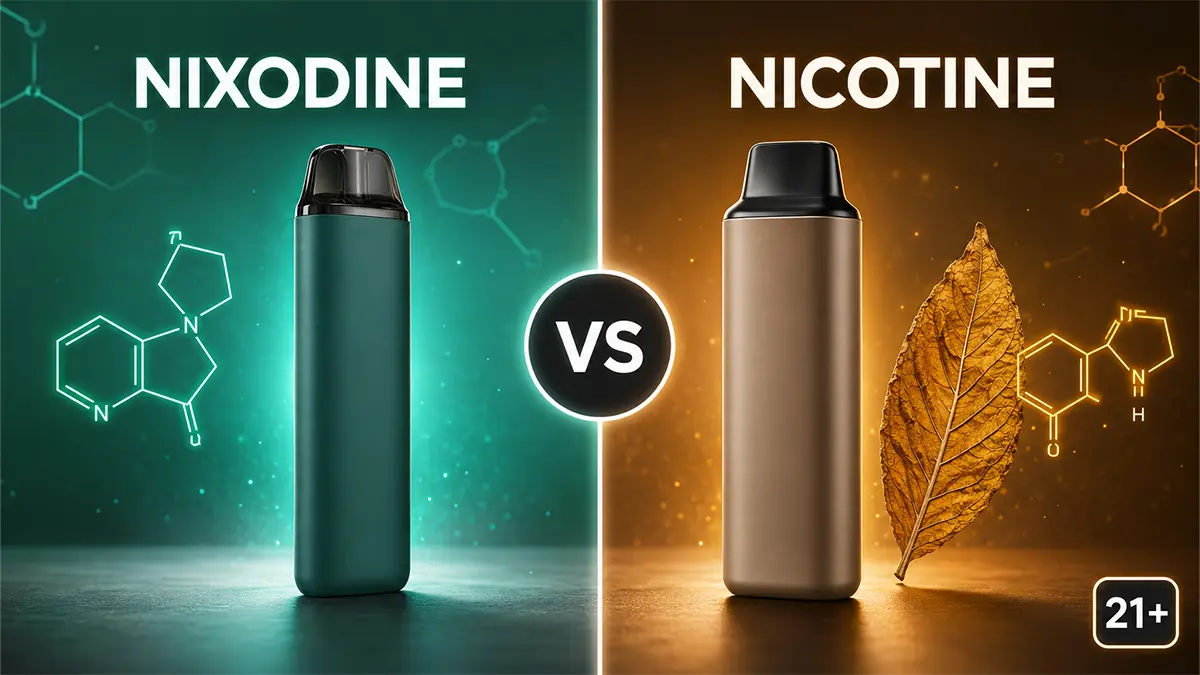
Nixodine and nicotine both act on the same receptors in your brain, so a Nixodine vape can feel a lot like a nicotine one. The big difference is what each one is. Nicotine comes from tobacco or is made to be chemically identical to it. Nixodine is a nicotine alternative. Its maker says it isn't derived from tobacco or nicotine at all. It's usually built from nicotinamide (a form of vitamin B3) plus a nicotine look-alike called 6-methylnicotine.
That single fact ripples outward. Nixodine skips the benzoic acid used in nicotine salts, so the throat hit reads smoother. It doesn't break down into cotinine, the marker that standard nicotine tests look for. And because it isn't tobacco-derived nicotine, it sits in a different, unsettled legal and safety category. This guide is educational, not medical or legal advice. You must be 21+ to buy any nicotine or nicotine-alternative product.
- Nicotine is tobacco-derived (or made identical to it). Nixodine's maker says it's a synthetic alternative from nicotinamide plus 6-methylnicotine.
- Both activate the same nicotinic receptors, so the "buzz" feels similar.
- Nixodine skips benzoic acid, so the throat hit is often described as smoother than nicotine salt.
- Nixodine doesn't metabolize into cotinine, so standard nicotine tests miss it. Nicotine does show up.
- Nicotine is FDA-regulated as a tobacco product. Nixodine's status is disputed, and some researchers warn its analogue may be more toxic. Research is limited.
Nixodine vs Nicotine at a Glance
Here's the fast version before we dig in. This table lines up the two side by side on the points shoppers ask about most. Read the sections below for the detail behind each row.
| Feature | Nixodine | Nicotine |
|---|---|---|
| Source | Maker says synthetic, not from tobacco or nicotine (nicotinamide + 6-methylnicotine) | Tobacco-derived, or synthetic nicotine made identical to it |
| Receptor action | Activates the same nicotinic receptors (nAChRs) | Activates nicotinic receptors (nAChRs) |
| Throat hit | Often described as milder and smoother | Salt form gives a sharper, stronger hit |
| Benzoic acid | Typically skipped | Used in nicotine salts for a harder hit |
| Cotinine / drug test | Doesn't form cotinine, so standard nicotine tests miss it | Breaks down into cotinine, which tests detect |
| FDA / tobacco regulation | Disputed; maker claims it sits outside tobacco rules (not FDA-evaluated) | Regulated by the FDA as a tobacco product |
| Research maturity | Limited public data; some researchers warn of higher toxicity | Decades of published research |
What Is Nixodine?
Nixodine is a synthetic nicotine alternative. According to its maker (nixodineinside.com), it's a lab-made alkaloid that isn't derived from tobacco or from nicotine. Most versions pair nicotinamide, a form of vitamin B3, with a nicotine analogue called 6-methylnicotine, or 6-MN for short. That analogue is the part designed to give you a nicotine-like feel.
The whole pitch rests on that "not nicotine" claim. The maker positions Nixodine as smoother, nearly tasteless, and "potentially less toxic." Those are the company's words, not settled science. The maker also notes its statements haven't been evaluated by the FDA. So treat the marketing claims as claims, not proven facts. For the full breakdown, see our pillar guide, What Is Nixodine?
What Is Nicotine?
Nicotine is the addictive compound found naturally in tobacco. It's the active ingredient in cigarettes, most vapes, and nicotine pouches. It comes either straight from the tobacco plant or as "synthetic nicotine" that labs build to be chemically identical to the natural kind. Either way, your body treats it the same.
Modern vapes usually use nicotine salt. That's nicotine combined with an acid, most often benzoic acid, which lets you inhale higher strengths without a harsh burn. Nicotine is well studied, and it's regulated. In the United States, the FDA oversees nicotine as part of tobacco products, including synthetic versions. That regulatory status is one of the sharpest lines between it and Nixodine.
Same Receptors, Different Molecule
Here's where the two overlap. Both Nixodine's 6-MN analogue and nicotine bind to the same targets in your body, the nicotinic acetylcholine receptors, or nAChRs. That's why a Nixodine vape can deliver a buzz that feels a lot like nicotine. Same lock, similar key.
But similar isn't identical. 6-methylnicotine is a different molecule, and that matters for two big reasons. Your body processes it differently, which is why it doesn't leave the same cotinine trail. And its effects aren't as studied, so "feels the same" doesn't automatically mean "acts the same" over time. We'll come back to that safety gap below.
Nixodine vs Nicotine Salt: The Throat Hit
A lot of shoppers really mean "nixodine vs nicotine salt" when they compare the two, because nic salt is what most disposables use. The practical difference comes down to one ingredient: benzoic acid.
Nicotine salts add benzoic acid to smooth out high-strength nicotine, but it still lands with a firm throat hit. Nixodine usually skips benzoic acid entirely. Fans describe the result as cleaner and milder, with flavor that isn't masked by a sharp bite. If you've found nic salt too harsh, that's the appeal. Just remember milder doesn't mean safer. A gentler throat hit can make it easier to inhale more, which is worth keeping in mind.
Drug Tests: Why Nixodine Slips Past
This is one of the biggest real differences. When your body processes nicotine, it produces cotinine. Standard nicotine screenings, the kind some employers and insurers use, look for cotinine in blood, urine, or saliva.
Nixodine's 6-MN analogue doesn't break down into cotinine. So a routine cotinine-based nicotine test won't flag it. We're stating that as a neutral, educational fact, not as advice to get around any test. Testing methods also change over time, and a "nicotine-free" screen isn't the same as a clean bill of health. For the deeper version, read Does Nixodine Show Up on a Nicotine Test?
Regulation and Safety: The Unsettled Part
This is where the two really split, and where you should slow down. Nicotine is regulated. The FDA treats it as a tobacco product, synthetic versions included. That means age limits, product review, and oversight.
Nixodine sits in a gray zone. Because it isn't tobacco-derived nicotine, its maker argues it falls outside those tobacco rules. But that gap is closing. California's 2024 law treats nicotine analogues the same as nicotine, and other states are looking closely. On safety, be careful with the "less toxic" pitch. That's the maker's claim, and public long-term research is limited. Some independent researchers warn that 6-methylnicotine analogues may be more toxic and more addictive than nicotine, not less. The honest summary: nobody has the full picture yet.
- Regulation: nicotine is FDA-regulated; Nixodine's status is disputed and shifting by state.
- Maker's claim: "potentially less toxic," not FDA-evaluated.
- Counter-evidence: some researchers warn the analogue may be more toxic and addictive.
- Data: long-term studies are limited, so treat every safety claim as unsettled.
Want the full safety picture? See Is Nixodine Safe? What the Research Says.
Where to Try Nixodine at Vape City USA
If you're curious to feel the difference yourself, the store carries a Nixodine-based device. The HQD Snap 50K Kit uses Nixodine instead of standard nicotine, so it's the easiest way to compare the smoother profile against a regular nic-salt disposable. You can also browse the full HQD brand page.
For a hands-on breakdown of that device, read our HQD Snap 50K review. And no matter which you choose, the 21+ rule and the "research is limited" caveat both still apply.
Frequently Asked Questions
Is Nixodine the same as nicotine?
No. Nixodine is a nicotine alternative, not nicotine. Its maker says it's a synthetic alkaloid built from nicotinamide plus a 6-methylnicotine analogue, not derived from tobacco or nicotine. It activates the same brain receptors, so it can feel similar, but it's a different molecule with a different legal and safety status.
What's the difference between Nixodine and nicotine salt?
Nicotine salt is nicotine mixed with benzoic acid to smooth out a strong throat hit. Nixodine usually skips benzoic acid, so users often describe it as milder and cleaner-tasting. Nixodine also isn't tobacco-derived nicotine, while nic salt is regulated as a nicotine product.
Does Nixodine show up on a nicotine test?
Not on a standard one. Nicotine breaks down into cotinine, which typical nicotine tests look for. Nixodine's 6-methylnicotine analogue doesn't form cotinine, so a routine cotinine-based screen won't detect it. This is an educational fact, not advice about testing, and methods can change.
Is Nixodine safer than nicotine?
That's unproven. Nixodine's maker claims it's "potentially less toxic," but that hasn't been evaluated by the FDA, and long-term research is limited. Some independent researchers warn the 6-methylnicotine analogue could be more toxic and more addictive than nicotine. Treat "safer" as an open question, not a fact.
You must be 21+ to purchase any nicotine or nicotine-alternative product. This article is educational and isn't medical or legal advice. Nixodine's safety and legal status are still being researched and vary by state, and it hasn't been evaluated by the FDA. Verify current law and consult a professional before making health decisions.