WARNING: Products on this page contain hemp-derived THC and are intoxicating. For adults 21+ only. They will fail a drug test. Check your state's laws before purchasing.
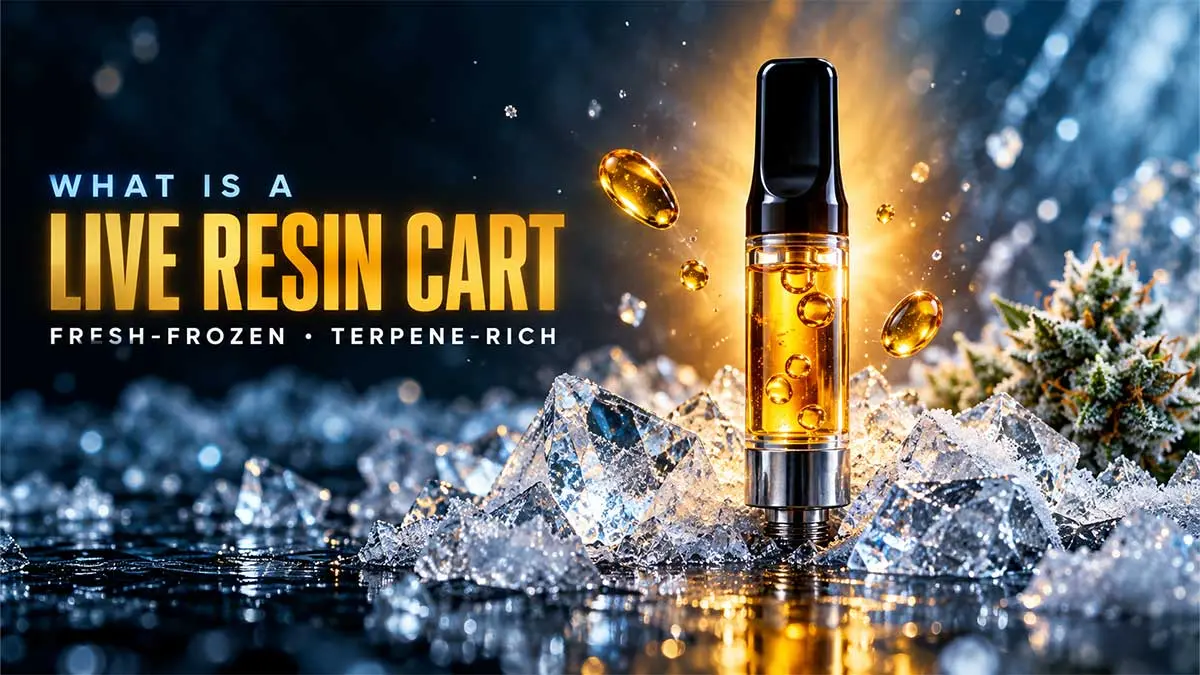
A live resin cart is a vape cartridge filled with live resin: an extract made from hemp or cannabis that was frozen immediately after harvest instead of dried and cured. Freezing keeps the plant's terpenes intact, so the oil tastes and smells like the strain it came from rather than like something added afterwards. Everything else about the cart, the 510 thread and the ceramic coil, is the same as any other.
Key Takeaways
- "Live" means fresh-frozen. The plant went into a freezer within hours of being cut, not into a drying room.
- Terpenes are the point. They survive the freeze, and they carry the flavor and aroma.
- It tests lower than distillate and that's expected. Terpenes take up room that would otherwise be cannabinoid.
- The COA settles it. A real live resin extract shows a measurable terpene profile.
What live resin actually is
Most cannabis and hemp extract starts life the same way flower does: the plant is cut, hung, dried over a week or two, then cured. Drying is what makes flower smokeable, but it's also destructive. Terpenes are volatile, which is a technical way of saying they evaporate at room temperature, and a large share of them leave during those two weeks.
Live resin skips that entirely. The plant goes into a freezer within hours of harvest, while it's still wet, and it stays frozen through extraction. Nothing gets a chance to evaporate. What comes out the other end carries the terpene profile the plant actually had while it was alive, which is where the name comes from.
That's the whole idea. Not a different plant, not a different cannabinoid, just a different moment at which the material gets processed.
What makes a cart a live resin cart
The hardware is ordinary. A 510-thread cartridge is a small glass tank with a ceramic heating element and a threaded base that screws onto a battery. Live resin carts, distillate carts and everything in between use the same basic part.
What changes is the oil inside, and it changes two practical things:
- Viscosity. Live resin is thicker and more textured than distillate. Good cart hardware handles it; cheap hardware clogs. This is why live resin carts tend to come from brands that care about the coil.
- Flavor consistency. A live resin cart tastes like one specific harvest. Two batches of the same strain can taste slightly different, the way two vintages of the same wine do. Distillate carts taste the same every time because the flavor is added, not captured.
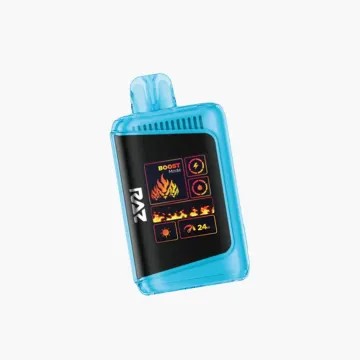
You'll also see live resin in disposables, where the same oil sits in a device with a built-in battery. The extract is identical. Only the hardware differs.
How live resin is made
Five steps, and the first one is the one that matters.
- Harvest and freeze. The plant is cut and frozen within hours, usually flash-frozen. No drying, no curing.
- Cold extraction. The frozen material is washed with a hydrocarbon solvent, typically butane or propane, kept cold throughout so the terpenes don't cook off.
- Purge. The solvent is removed under vacuum at low heat. This step decides whether the product is clean, and it's what a residual-solvent test on the COA is checking.
- Finish. Depending on how it's handled from here, the extract ends up as a pourable oil, a whipped badder, or a sauce that separates into liquid terpenes and crystals.
- Fill. The oil goes into carts or disposables, sometimes blended to hit a target cannabinoid ratio.
Live rosin, which sounds nearly identical, replaces steps two and three with ice water and a heated press and uses no solvent at all. It costs considerably more.
What live resin looks like
In a cart, expect a color somewhere between pale gold and dark amber, and an oil that moves slowly when you tilt it. Hold a live resin cart sideways and the bubble takes its time. Do the same with a distillate cart and it usually runs.
Outside a cart, live resin can look like several different things depending on how it was finished: a thick sappy oil, a soft opaque badder, or a wet mixture with visible crystals in it. All of those can be live resin.
One honest caveat: color proves very little. Strain, harvest and purge all move it, and a darker cart is not automatically a worse one or an older one. Anyone selling you a rule about color is overselling it. The lab report is the only reliable read.
What "live" means on a label, and what it doesn't
"Live" is a claim about timing, and it's the only thing the word tells you. It doesn't mean stronger, it doesn't mean solventless, and it doesn't mean the product is better made.
Some labels to read carefully:
- Live resin: fresh-frozen, solvent-extracted. What most live carts contain.
- Live rosin: fresh-frozen, solventless. More expensive.
- Cured resin: same method as live resin, but from dried material. Not live.
- Live terpenes or CDT: usually distillate with cannabis-derived terpenes added back. Closer to live resin in taste, but it isn't live resin.
- Just "terpenes": almost always botanical, sourced from other plants.
If a cart carries a high cannabinoid number, in the nineties, and no terpene panel, it's distillate whatever the front of the box says. For a fuller breakdown of how these extracts differ, see our guide to live resin versus distillate and rosin.
Live resin in other formats
Carts are the most common place to find it, but they aren't the only one.
Disposables put the same oil in a sealed device with its own battery. Nothing to screw together and nothing to buy separately, which is why most hemp live resin sold today is in this format.
Live resin gummies use live resin as the cannabinoid source instead of distillate. In an edible you won't taste the terpenes the way you do in vapor, so the practical difference is smaller than it is in a cart. Some people report the effect feels rounder; that's subjective and worth treating as such.
Concentrates sold for dabbing are the same extract in its undiluted form, in whichever texture it was finished as.
Is a live resin cart worth it?
It depends entirely on what you're optimizing for.
If you want the most cannabinoid per dollar, it isn't. Distillate is cheaper and tests higher, and that gap is real.
If you want a cart that tastes like a specific strain rather than like a flavor profile, it is, and the difference is obvious on the first draw rather than something you have to convince yourself of.
The useful test for a newcomer: buy the smallest live resin format a brand sells and compare it against a distillate cart you already know. If the difference doesn't land for you, you've learned that cheaply and you can buy distillate with a clear conscience.
Live resin carts and disposables at Vape City USA
Everything Mellow Fellow makes uses live resin extraction, across four formats.
- Mellow Fellow 2ml Live Resin Cart: a 510-thread cart in all 10 mood blends. The one to buy if you already own a battery.
- Mellow Fellow Duo Cart 4ml: two 2ml carts in one pack so you can compare blends. Lowest cost per gram of the four.
- Mellow Fellow 1ml Live Resin Disposable: the smallest way to try one, no battery needed.
- Mellow Fellow 4ml Live Resin Disposable: the flagship, 10 blends and 19 strains.
- Geek THCX GT6000: 6g of CB9A and THCP with live resin terpenes.
See them together on our Mellow Fellow live resin page, or browse every live resin cart and live resin disposable we stock. Everything across our hemp and THC range is third-party lab tested and sold to adults 21 and over only.
Frequently asked questions
What is a live resin cart?
A 510-thread vape cartridge filled with live resin, an extract made from plant material that was frozen right after harvest instead of dried. The freezing preserves the terpenes, so the cart tastes like the strain rather than like added flavoring.
What does live resin mean?
"Live" refers to when the plant was processed. It was frozen while still fresh, so the terpene profile it had as a living plant survives into the extract. It says nothing about potency or about which solvent was used.
How is live resin made?
The plant is frozen within hours of harvest, extracted cold with a hydrocarbon solvent like butane or propane, purged of that solvent under vacuum at low heat, finished into an oil, badder or sauce, and then filled into carts or disposables.
What does live resin look like?
In a cart, a slow-moving oil somewhere between pale gold and dark amber. Outside a cart it can be a thick sap, a soft whipped badder, or a wet mixture with visible crystals. Color alone tells you very little about quality.
Is live resin stronger than distillate?
By lab percentage, no. Distillate is refined to 90% and above, while live resin tests lower because terpenes occupy part of the oil. Many people find live resin feels fuller at the same dose, which is a different thing from being stronger.
What are live resin gummies?
Gummies that use live resin as the cannabinoid source instead of distillate. Because you don't taste terpenes in an edible the way you do in vapor, the difference is less pronounced than it is in a cart.
Is live resin the same as live rosin?
No. Both start from fresh-frozen material, but live resin uses a hydrocarbon solvent while live rosin uses only ice water, heat and pressure. Rosin costs more and needs better starting material.
How can I tell if a cart is really live resin?
Check the COA. A genuine live resin extract shows a measurable terpene percentage with named terpenes. A cart testing in the nineties for cannabinoid with no terpene panel is distillate, whatever the packaging says.
Does live resin get you higher?
Not by cannabinoid content, since it usually tests lower than distillate. Reports of a fuller or more rounded effect are common and are generally attributed to the terpenes, but that's a subjective experience rather than a measured one.
This product is derived from hemp and contains less than 0.3% Delta-9 THC in compliance with the 2018 Farm Bill. This product has not been evaluated by the FDA. It is not intended to diagnose, treat, cure, or prevent any disease.