Smell-proof bags work by using an activated carbon lining that traps and neutralizes odor molecules before they can escape. The carbon acts like a filter: air can't carry the smell out because the odor particles get caught in the carbon's huge internal surface area. Add sealed or lockable zippers and a tight-woven outer material, and you get a bag that keeps its contents discreet. Here's how each part works, and how to keep a bag performing over time.
Short version: Activated carbon adsorbs odor molecules, sealed zippers stop air leaks, and airing the carbon out now and then keeps it effective.
The Key: Activated Carbon Lining
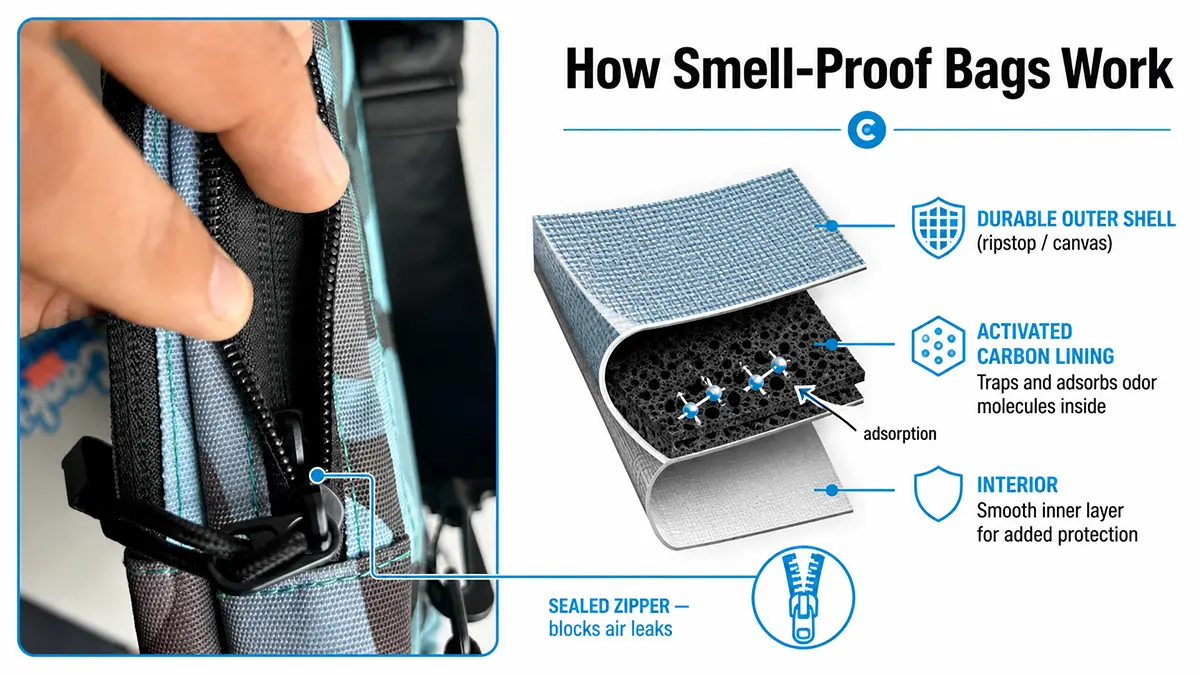
The heart of any real smell-proof bag is a layer of activated carbon built into the lining. Activated carbon is carbon that's been processed to be extremely porous, so a single gram has an enormous internal surface area. When odor molecules drift toward the fabric, they get trapped in those pores through a process called adsorption, where the molecules stick to the carbon's surface instead of passing through.
That's the difference between a genuinely smell-proof bag and a bag that just claims to be. Without the carbon layer, a zipper and thick fabric only slow odor down. The carbon is what actually captures it.
Sealed and Lockable Zippers
The second piece is the closure. Odor escapes through gaps, so smell-proof bags use tight, often sealed zippers that close the bag off from outside air. Many models, including most Cookies bags, add lockable zippers so the bag stays shut and secure. A good seal keeps the carbon lining doing its job by limiting airflow in and out.
Durable Outer Materials
The outer shell matters too. Tight-woven materials like ripstop nylon or heavy canvas resist letting air pass through the fabric itself, and they hold up to daily use. This is why quality smell-proof bags feel sturdy: the build is part of the odor control, not just the looks.
Do Smell-Proof Bags Really Work?
Yes, when they're well made. A carbon-lined bag with sealed zippers does a strong job of containing odor for everyday carry. The honest caveat: no bag is a perfect vacuum forever. Over time and heavy use, the carbon can become saturated, which reduces how much it can trap. The good news is that it's usually renewable.
How to Keep a Smell-Proof Bag Working
- Air it out. Empty the bag and leave it open in fresh air now and then. This lets the carbon release trapped molecules and reset.
- Use gentle sunlight. A little indirect sun can help refresh the carbon lining. Avoid long, harsh exposure that could fade the material.
- Keep the zippers clean. Debris in the zipper track breaks the seal. Wipe them so they close fully.
- Don't overpack. Forcing the bag past its limit strains the seal and the lining.
- Spot clean only. Skip the washing machine, which can damage the carbon layer. Wipe the interior with a dry or barely damp cloth.
Cookies Smell-Proof Bags
Cookies builds its bags around this exact system: a carbon-lined interior, sealed and lockable zippers, and tough ripstop or canvas shells. If you want a proven option, start with the Utility Rucksack ($125) or the budget-friendly Layers Shoulder Bag ($52). To compare the whole range, see our best Cookies bags guide, and to learn the brand behind them, read What Is Cookies SF.
Smell-Proof Bag FAQ
How do smell-proof bags actually work?
They use an activated carbon lining that traps odor molecules through adsorption, so the smell can't pass through the fabric. Sealed or lockable zippers and tight-woven outer materials limit airflow, which keeps the carbon doing its job. Together, that contains odor inside the bag.
Do smell-proof bags really stop all odor?
A well-made carbon-lined bag does a strong job of containing odor for everyday carry, but no bag is a perfect seal forever. With heavy use the carbon can saturate over time, which reduces performance. Airing the bag out helps refresh the lining.
How do you refresh a smell-proof bag?
Empty it and leave it open in fresh air, and give the carbon lining some gentle, indirect sunlight. Keep the zippers clean so the bag seals fully, and avoid machine washing, which can damage the carbon layer. This resets much of the bag's odor control.
What material are smell-proof bags made of?
Quality smell-proof bags use a carbon lining inside and a tight-woven outer shell like ripstop nylon or heavy canvas. The outer material resists airflow and stands up to daily use, while the carbon layer handles the actual odor control.
Are Cookies bags smell proof?
Yes. Cookies bags use a carbon-lined interior with sealed, lockable zippers and durable ripstop or canvas shells, so they contain odor while working as everyday bags. They're lifestyle accessories and contain no cannabis or nicotine.
Browse carbon-lined options in the Cookies collection at Vape City USA. Adults 21+.